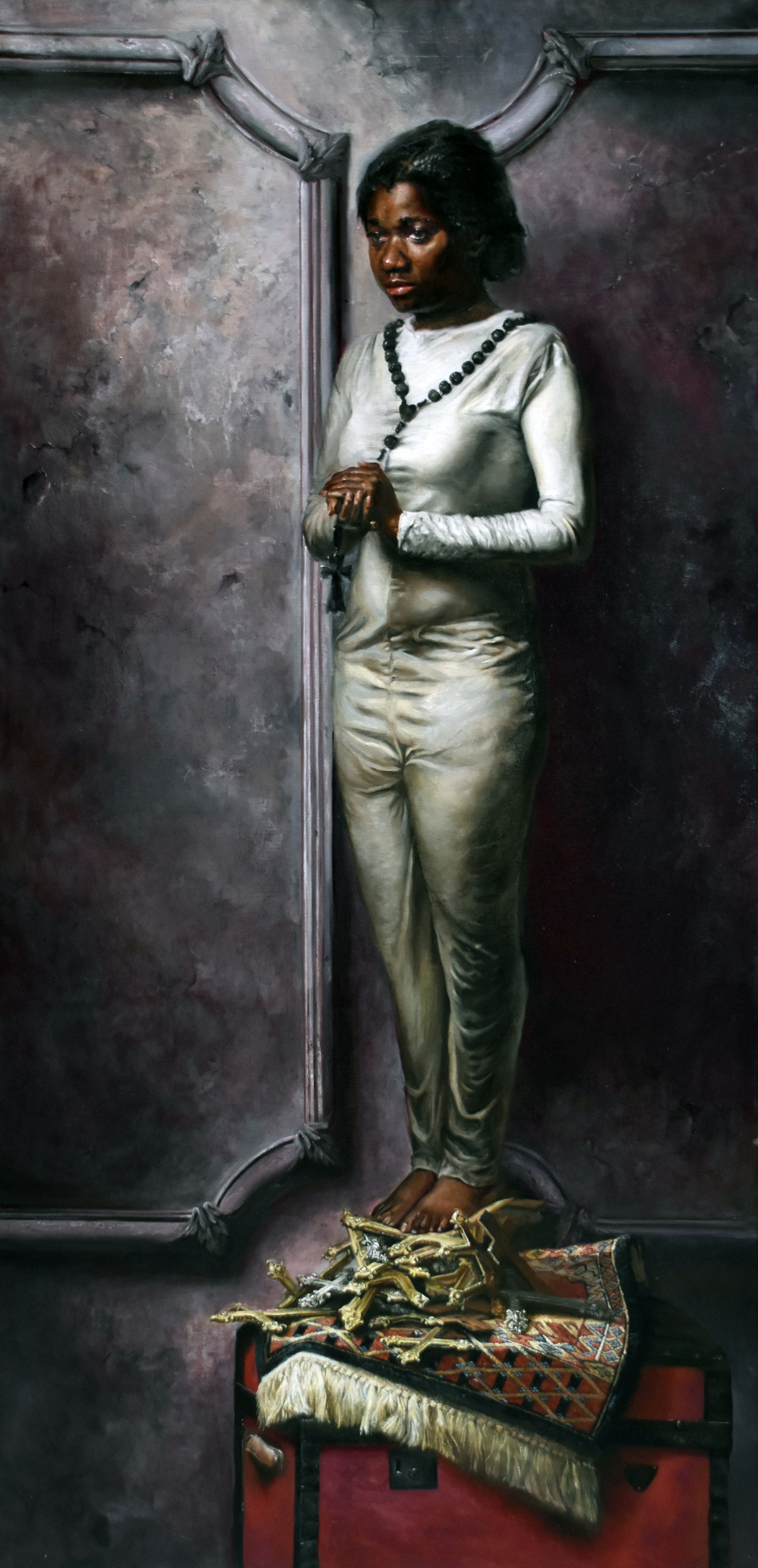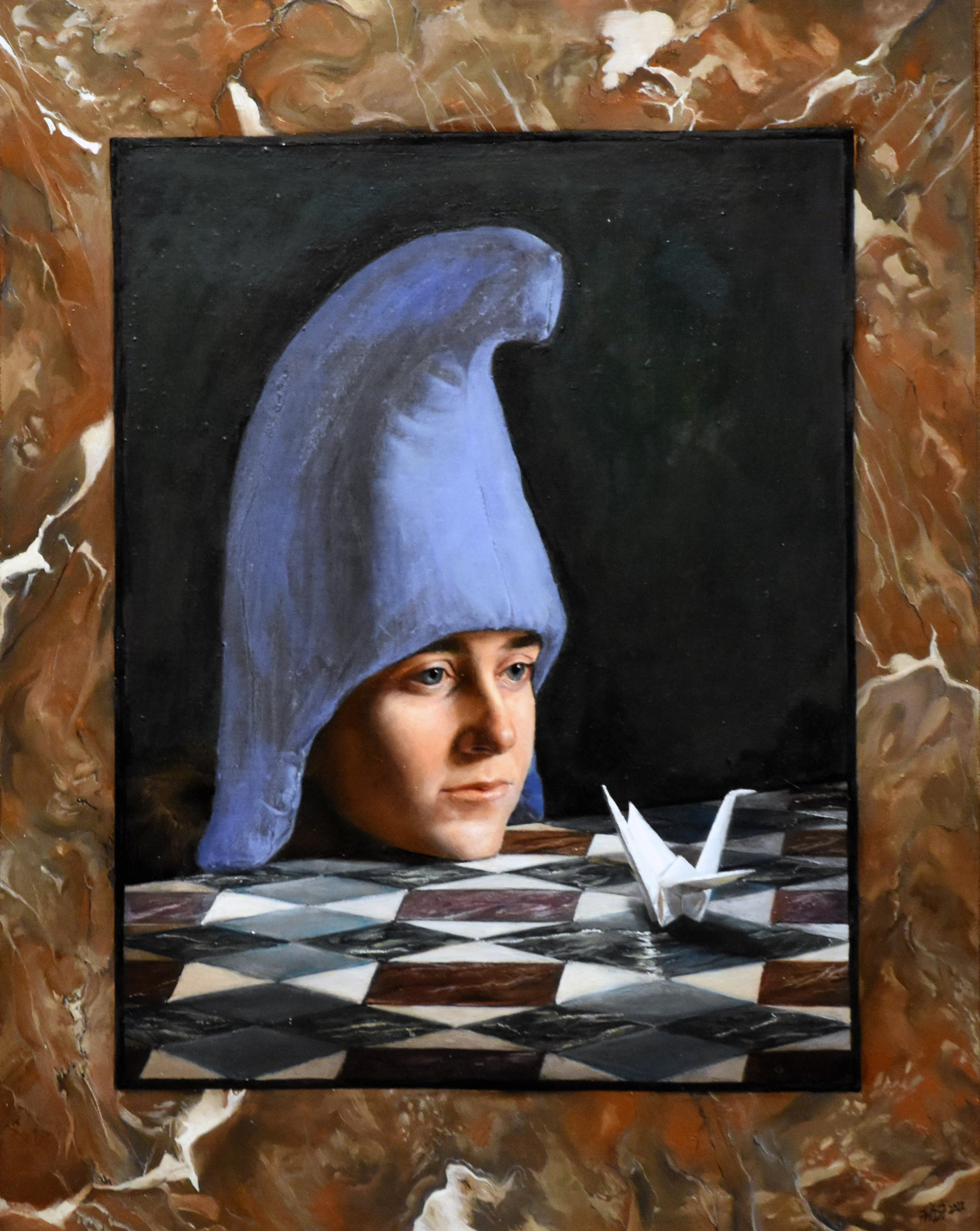
Painting to me is creating technically good figurative work. And that’s where my strength lies. The application of accurate drawing skills with anatomy/écorché, scales, proportion and colour and different kinds of perspectives – it’s what I like and what I’m good at. I owe this knowledge to my three-year academic training in Florence.
A sublime painting is the result of a painter’s talent and handmade materials. Painting with handmade paints adds optical and artistic value to a work. Being able to make ‘Flemish pure linen’ canvas and panel with natural materials yourself, as well as knowing and understanding how the materials react with each other, is quite an assit.
This way of working offers a painter additional artistic and technical options, in contrast to the use of modern tube paints. Tube paints are industrially made, which means that the characteristics and purity of the material are hardly visible.
I master an exceptionally wide range of historical painting techniques. My expertise spans classical painting methods from the 13th through the 19th century, including Tüchlein painting (glue-based painting), watercolor, casein painting, miniature painting with tempera and clarified egg white, buon’ fresco, secco, sgraffito, and scagliola.
I also specialize in Renaissance painting techniques, including gilding methods such as pastiglia, traditional lean egg tempera, tempera grassa, and hybrid techniques combining oil and tempera according to the traditions of the Late Renaissance and Mannerism. The Manchester Madonna technique, inspired by Michelangelo, is also part of my field of expertise.
Within oil painting, I master both the refined techniques of the Flemish Primitives in the tradition of Jan van Eyck and the painting methods of the 17th through 19th centuries, including academic techniques and working methods associated with Peter Paul Rubens and Rembrandt. Historical drawing techniques such as gall ink, silverpoint, and leadpoint drawing also form part of my expertise.
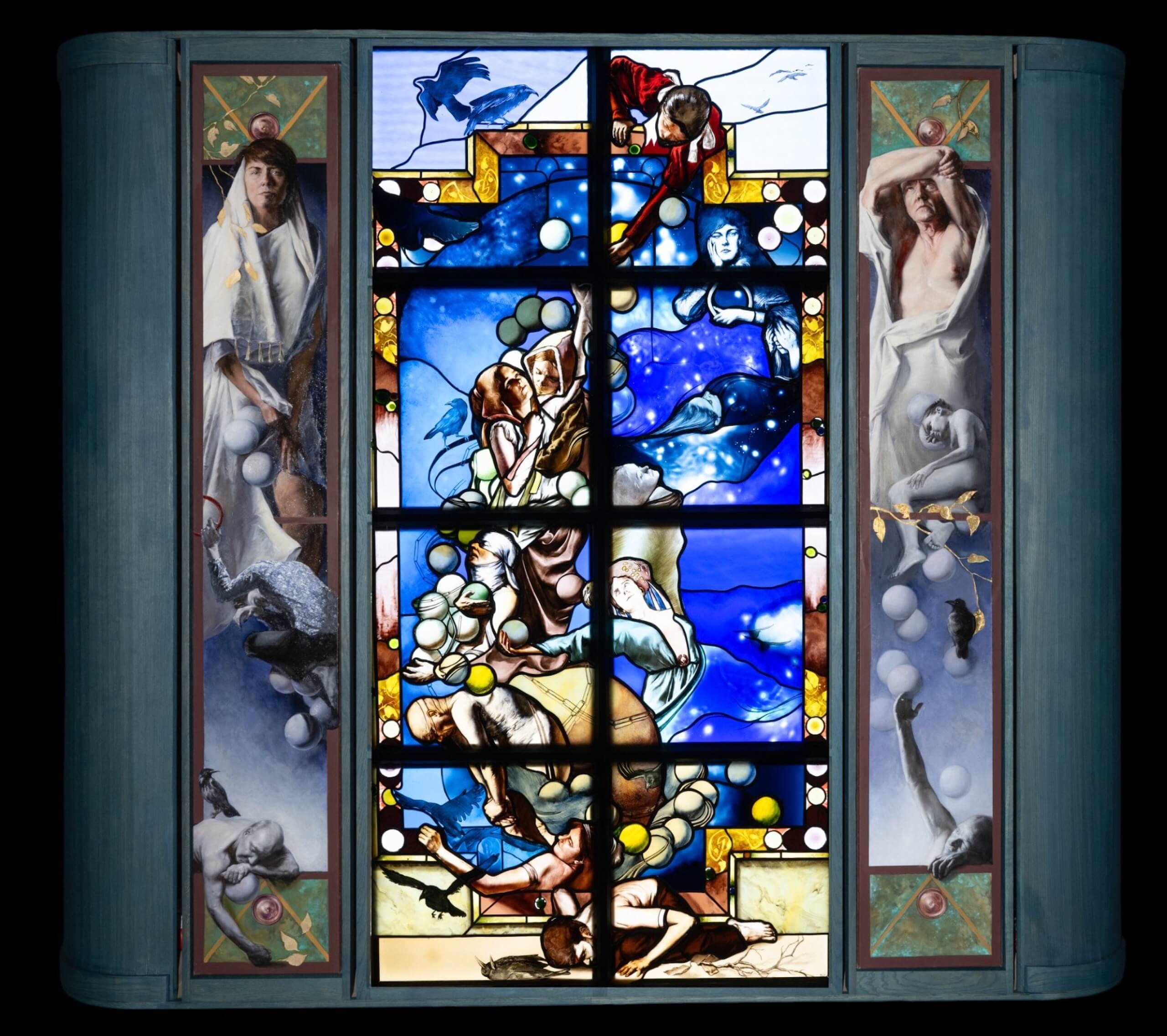
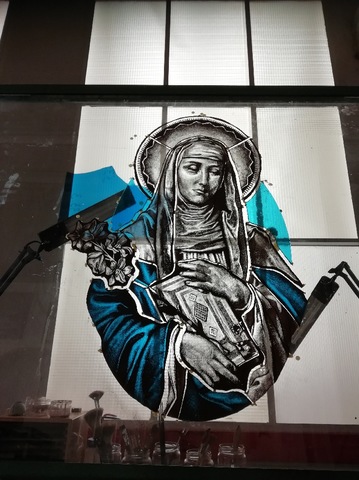
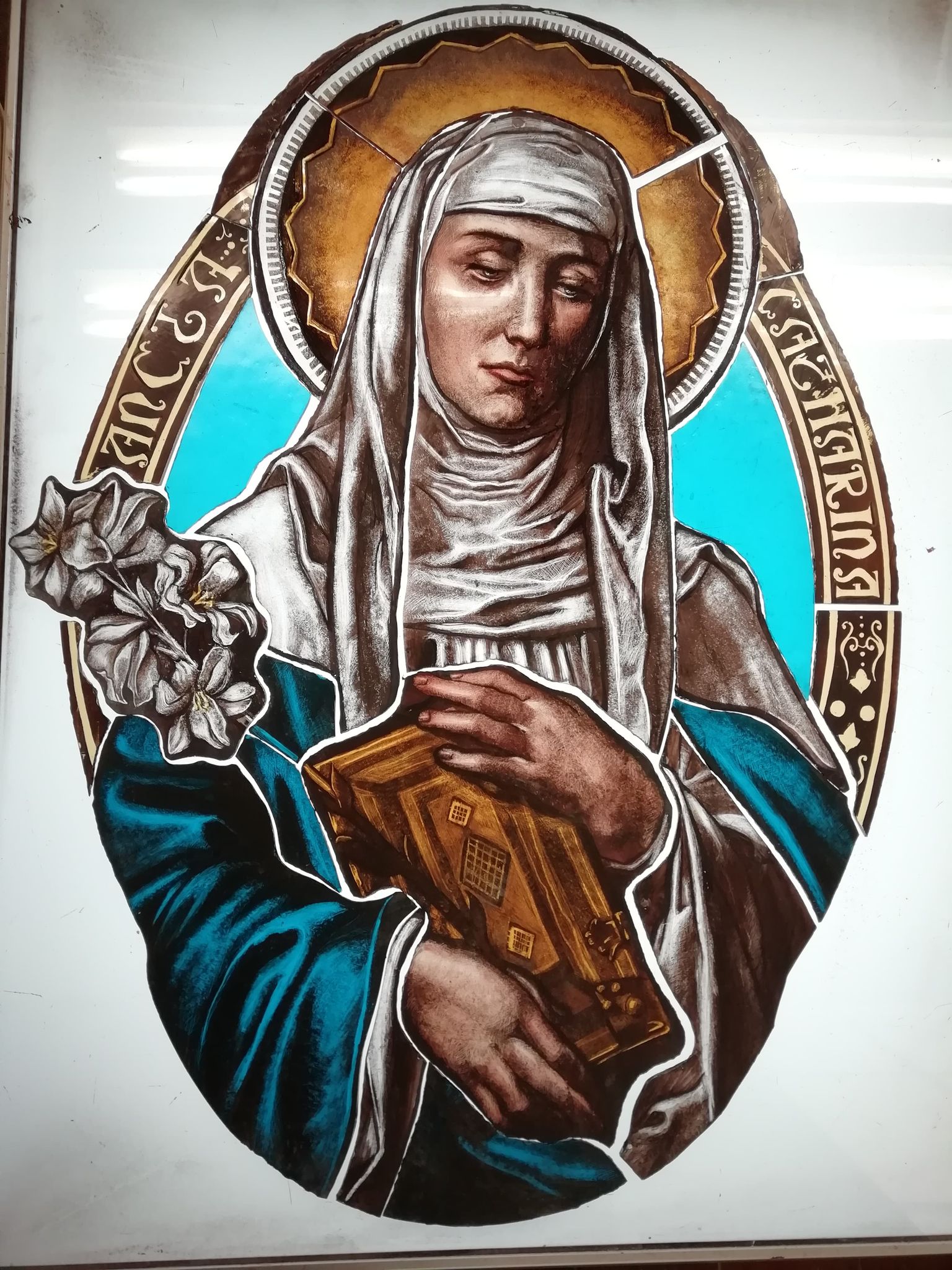
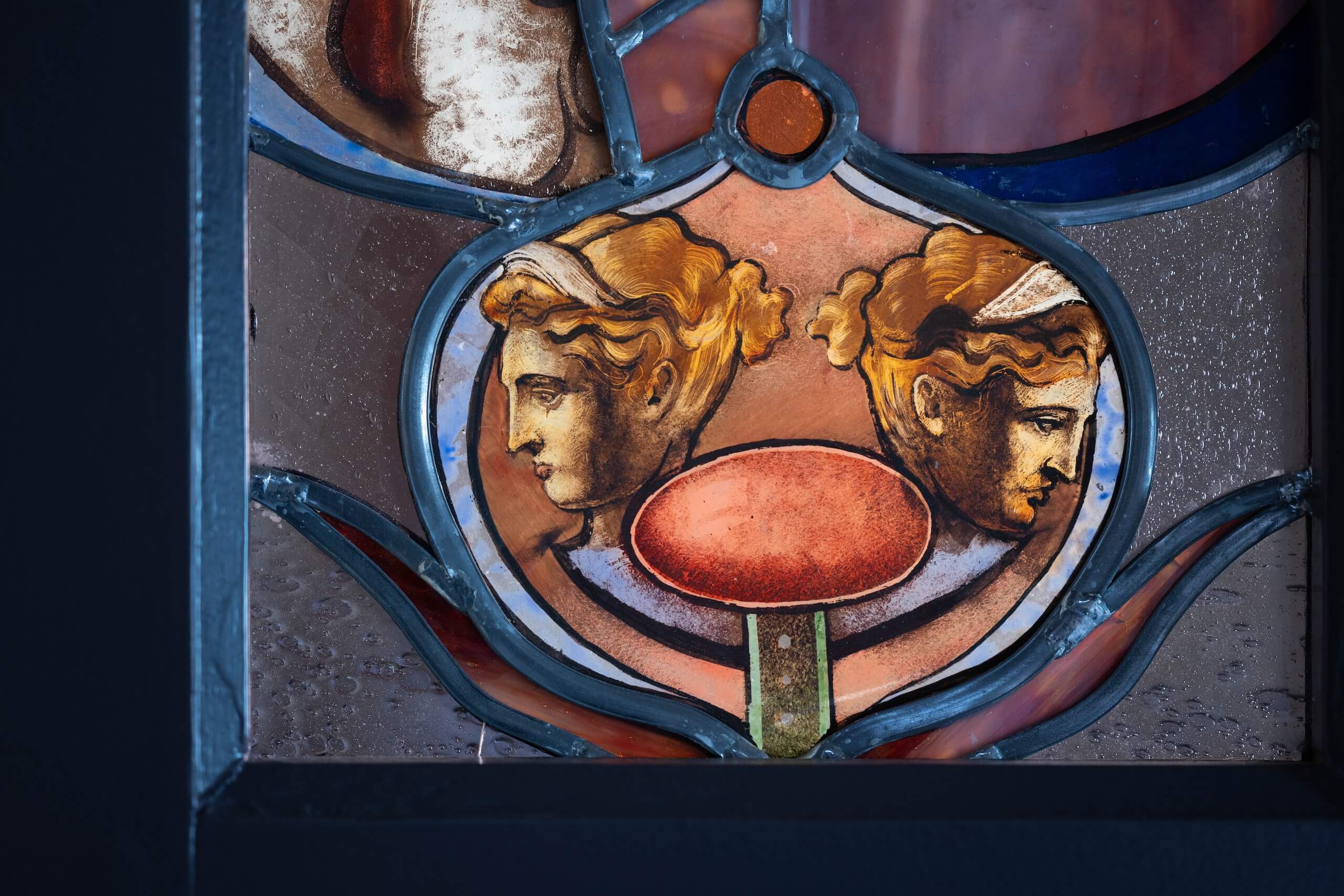
Stained glass windows have been known for centuries as a functional object, which usually served to provide wall openings in churches with a religious narrative. This gave stained glass painting the corny reputation of an inferior applied art.
For some years now, more attention has been paid to stained glass windows and the technique of painting glass. Hopefully, this will bring it to the public’s attention, so that a stained glass window will be considered a noteworthy art object.
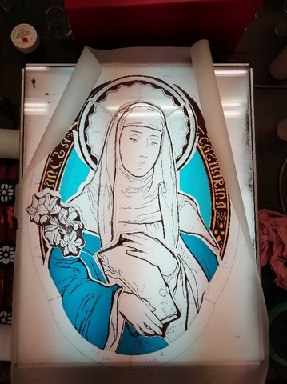
In the field of stained glass, I master all glass-painting techniques from the 12th through the 19th century, including glass cutting, leading, and vitreous painting with grisaille and enamels. My specialization lies in realistic stained-glass painting according to 19th-century techniques. I also possess foundational knowledge in the restoration and repair of stained glass windows.
In addition, I practice enameling on copper, specializing particularly in realistic painting on copper using the 13th-century grisaille technique, as well as in Émaux Peints de Limoges, a refined colored enameling technique practiced from the 15th through the 19th century. These are art forms that today are mastered at a high level by only a small number of artisans worldwide.
My mission is to create true Gesamtkunstwerke through this wide range of artisanal techniques, and to help inspire a new renaissance of craftsmanship.
Ontvang als eerste bericht over nieuwe tentoonstellingen.
Be the first to get notified on new expositions.